Why Your Reels Don't Go Viral: 5 Hidden Mistakes
Struggling with low views on Instagram Reels? Your content might be failing due to 5 common but hidden mistakes. Learn how to fix them and go viral.
You spent 3 hours on the idea, the shoot, the edit. You picked the perfect trending sound. You hit post. And... 412 views. Sound familiar?
It’s frustrating. It feels like the Instagram algorithm is some kind of dark magic, only understood by a chosen few. But it’s not. Usually, when a Reel flops, the reason is one of five non-obvious but systematic errors. Here at Clipwise, we’ve analyzed over 100,000 viral short videos, and the patterns are crystal clear. Let’s break down exactly where you might be losing millions of views.
Why do some videos go viral and yours don’t?
Have you ever wondered what Instagram's main goal is? It's to keep you inside the app for as long as possible. Not 15 minutes, but 45. Not 45, but an hour and a half. Every single video you see in your feed is a tool to achieve this goal. The algorithm doesn't just promote "interesting" or "high-quality" videos. It promotes content that is ruthlessly effective at holding human attention.
Photo by Lance Reis on Unsplash

The success of any Reel rests on two pillars: engagement signals and watch time. Signals are your likes, comments, shares, and saves. They're important. But watch time is king. If people watch your 30-second video to the end, or even better, rewatch it, that tells Instagram: "This video is great at holding attention, I should show it to another 100,000 people." And the opposite is also true. If 90% of viewers swipe away after three seconds, the algorithm concludes the video is a dud and buries it. All the mistakes we'll cover hit one of these two metrics.
Mistake #1: Your hook is weaker than decaf coffee
The first 3 seconds decide your video's fate. Not 5. Not 10. Three. If you don't give the viewer a compelling reason to stay in that tiny window, they're gone. The problem is that most creators start their videos with completely losing phrases.
Weak hooks look like this:
- "Hey everyone! Today I want to tell you..."
- "Unboxing the new..."
- "5 tips for..."
It's boring. It’s predictable. It creates zero intrigue. The viewer has seen it a thousand times before. Instead, try using a proven hook technique that grabs them instantly:
- Contrarian Hook: "Everything you know about growing on Reels is wrong in 2026."
- Pattern-Breaking Stat: "9 out of 10 marketers make this exact mistake in their videos."
- Personal Pain: "I wasted $500 on ads because I didn't know this one simple thing."
- Intrigue: "Here's why I'll never work with clients from this industry again."
The idea is to create an immediate information gap. Ask a question the viewer desperately wants the answer to. We think the hook is 80% of your success. A strong hook can save a mediocre video, while a weak one will bury even the most brilliant content. If you're struggling for ideas, you can find frameworks in our guide on ChatGPT for TikTok: A Step-by-Step Guide to Viral Videos, which apply just as well to Reels. Don't even think about filming until you have a killer opening line.
Mistake #2: You’re telling a story with no “valley of despair”
Even a 15-second video needs a story. And every good story has a structure: a beginning, a middle, and an end. Or more accurately: a setup, a conflict, and a resolution. Many creators just show a process or a result, forgetting the most important part—the conflict. The struggle. The "valley of despair."
Simply showing how you make a perfect breakfast is boring. But showing how you burned the toast, spilled the coffee, and almost gave up, but in the end managed to pull together a beautiful meal—that's a story. Viewers love watching people overcome challenges. It creates empathy and makes them stick around to see how it all turns out.
Try structuring your videos with this simple framework:
- The Problem: "My favorite white t-shirt looked like this..." (show a massive coffee stain).
- The Struggle: "I tried three different stain removers, and nothing worked" (show a quick montage of failed attempts).
- The Solution/Result: "But then I remembered this forgotten trick... and here's the result!" (show the perfectly clean t-shirt).
This works for any niche. Home repairs, cooking, marketing, fitness. There's always a problem, a struggle, and a solution. Show the struggle.
Don't be afraid to show imperfection.
Mistake #3: You're ignoring the only metric that matters: watch time
Do you know the average view percentage for your videos? If you don't, you're flying blind. As we've said, Watch Time is the #1 metric for the algorithm. Your goal isn't just to get someone to start watching; it's to get them to finish. Ideally, more than once.
Photo by Lance Reis on Unsplash
How to increase watch time?
There are a few technical tricks that help hold attention. The first is using open loops. This means you pose a question or create intrigue at the start of the video, but only reveal the answer at the very end. For example: "Which of these two side hustles made me $1,000 in one week? The answer is at the end." This forces the viewer to watch the whole thing.
Another trick is dynamic editing. A scene change every 1.5-2 seconds, animated text popping up on screen, and using B-roll (extra footage that illustrates what you're saying) all prevent the viewer's brain from getting bored. A static talking head in one angle for 15 seconds is almost guaranteed to fail. You can see how pacing and structure created a massive success in our breakdown of a 6 million view video in AI for Marketers: Deconstructing a 6M View Video Formula.
The 'perfect loop' advantage
One of the most powerful ways to send your Watch Time through the roof is to create a smooth loop. This is when the end of the video blends perfectly into the beginning, so the viewer doesn't immediately realize they're watching it for a second time. This can double or even triple your total watch time. For instance, a video might start with the phrase "Here's how I do..." and end on the exact same frame, just as the phrase is starting again. When a viewer gets stuck watching a video like this 2-3 times, the algorithm gets a super-strong signal that your content is worth promoting.
Mistake #4: Your CTA is “like and subscribe”
A Call to Action (CTA) is a must. But 99% of creators do it wrong. Phrases like "Like if you enjoyed this" or "Follow my profile for more" are the worst things you can say. Why? Because they don't create a conversation. And the 2026 Instagram algorithm loves comments. Especially when the creator replies and a discussion starts.
Instead of lazy, generic CTAs, ask an open-ended question that sparks a real discussion:
- "Have you ever had this problem? How did you solve it?"
- "Which of these three options do you like best? 1, 2, or 3?"
- "What's the main takeaway for you from this? Share it in one word."
The goal is to get a meaningful reply, not just a one-word comment. This shows the algorithm your content is provoking community interaction. And community interaction means more time spent in the app. But does this mean you can never ask for a follow? Not exactly. You just have to do it creatively, weaving it into the context of the story. For example: "I break down more mistakes like this every day on my profile—come have a look." It sounds much more natural. A deep dive into engagement quality, like a Shorts Video Audits: Why Sentiment Beats Likes, often shows that a weak CTA is the real reason for low engagement, not the content itself.
Mistake #5: You think technical quality is just a detail
The final mistake, often underestimated, is the technical side of things. Instagram doesn't like low-quality video. What does this mean in practice?
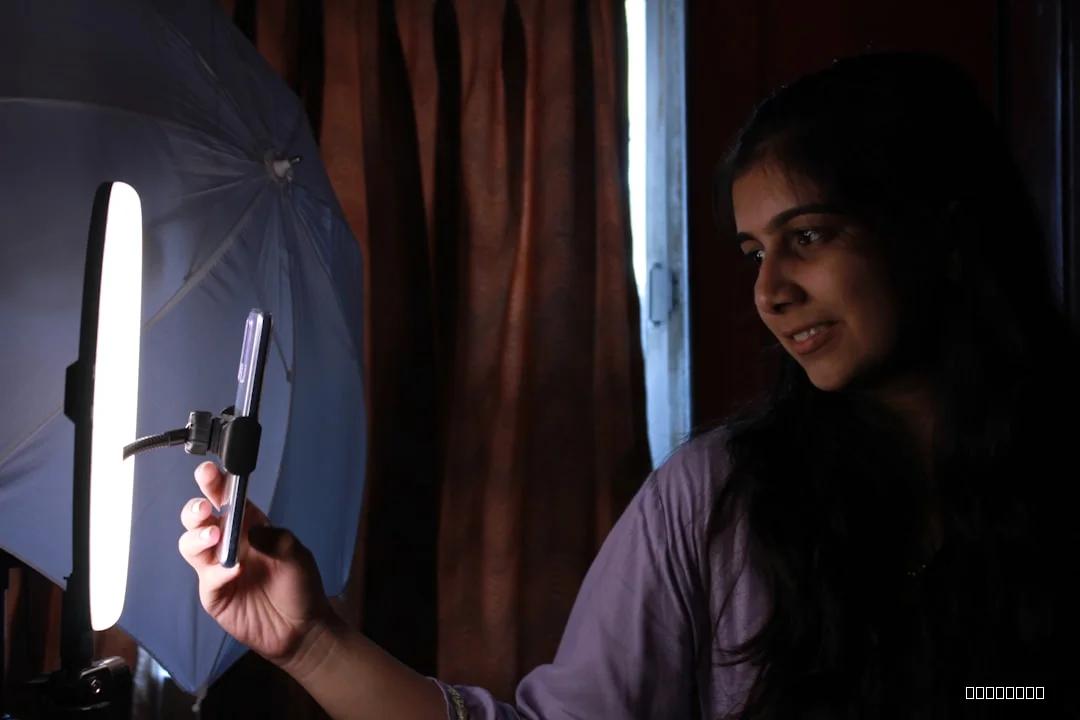
- Bad Lighting: Dark, grainy video where you can't clearly see faces or objects.
- Low Resolution: Blurry, pixelated images. Always shoot and export in Full HD (1080p) or 4K.
- Watermarks: Never, ever upload a video to Reels with a TikTok watermark on it. The algorithm sees this and instantly kills your reach.
- Bad Audio: If you're talking in your video, the sound has to be clean, without background noise. Invest in a simple $15 lavalier microphone—it will dramatically change your quality.
And, of course, trending music. It still works. However, there's a catch. Just picking a popular track isn't enough. It has to match the mood and pace of your video. Sometimes, a less popular but perfectly chosen sound works better. Or even original audio. According to a study by Social Media Examiner, videos with an original voiceover often get a 20-30% better initial boost because the platform encourages unique content.
Creating viral videos isn't a lottery; it's a system. Stop hoping for luck and start analyzing your Reels through the lens of these five mistakes. Work on your hook, tell a story, optimize for Watch Time, ask the right question at the end, and deliver a high-quality picture and sound. You'll see the numbers in your analytics start to climb. It won't happen overnight. But a systematic approach always beats chaotic attempts.
Try Clipwise for free
AI finds TikTok trends, analyzes videos and generates ideas. Starter tokens are free.
Create account
Sofia Melnyk
Growth Marketing & Analytics @ Clipwise